In the current world of globalization and highly controlled industrialization, the ability to consistently deliver quality is not only a competitive edge but also a survival demand. The third-party quality inspection is crucial in evaluating the quality of products and workmanship, and ensuring compliance with international standards through a completely independent and unbiased assessment.
Out of massive production facilities and small specific fabrication workshops to complicated construction projects, the independent quality inspection services are the last gatekeeper. These services enable organizations to mitigate operational risk, avoid expensive defects, and achieve dependable results throughout the supply chain by detecting deviations prior to their departure from the shop floor.
What Is Third-Party Quality Inspection?
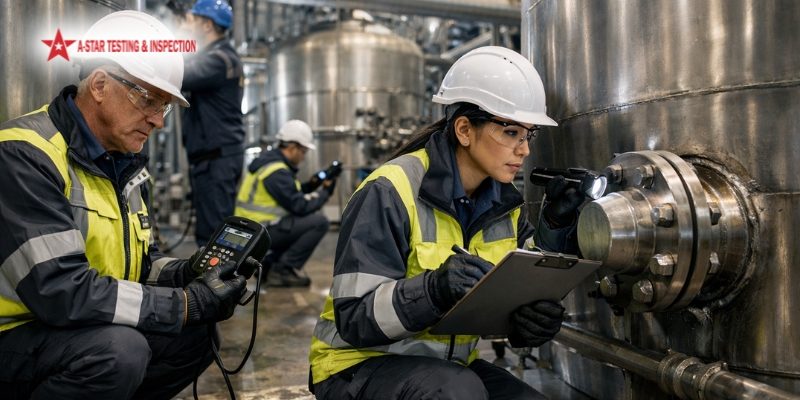
Third-party quality inspection is the activity that is carried out by the independent inspection authority, which has no commercial interest in the manufacturing or supplying or installation of the asset. This third eye will make sure that the interaction between a buyer and a seller is informed by objective data and not assumptions.
These are the external quality inspection services that guarantee:
- Objective Evaluation: A detached examination of the material and process.
- Contractual Fidelity: Checking that the supplier is performing what was ordered.
- Transparency: Well documented records of quality that creates trust among the project stakeholders.
The Strategic Importance of Independent Quality Inspection
Why are global leaders demanding that third parties control them? These are based on technical excellence and risk management:
1. Quality Assurance & Control (QA/QC)
A third-party inspection is another point of quality assurance and control, whereby products will be subjected to high standards of internal and external requirements before they are commissioned or shipped.
2. Comprehensive Risk Mitigation
Risk mitigation inspection avoids the domino effect of failures caused by a small defect in the weld in the factory converting into a disastrous field leak by detecting the defect during the initial stages of the production cycle.
3. Regulatory & Code Compliance
The industrial components need to meet the legal requirements of ISO, ASME, and API. A quality inspector makes sure that all the certificates, heat numbers, and test results used are traceable and operating.
Core Types of Third-Party Inspection Services
We offer the entire palette of lifecycle management of an asset:
- Manufacturing Quality Inspection: This involves supervision of the shop floor with a check on the adherence of the raw materials and the fabrication process to the design blueprint.
- Pre-Shipment Inspection Services: The last examination. We ensure the quality, packing, and quantity of goods are confirmed before transporting them.
- In-Process Inspection: Intermittent inspections at the so-called hold points to identify mistakes at the most critical points of cloth production.
- Vendor Inspection Services: We inspect supplier sites to ensure that they possess the equipment, human resources, and machinery to perform as they promise.
Industries That Rely on Independent Oversight
We also have our third-party quality inspection teams working in the areas where the cost of failure is high:
- Oil and Gas Inspection Services: Inspection of pipelines, valves, and pressure vessels.
- Power Plant Quality Inspection: The turbine and boiler parts must be of extreme-service quality.
- Fabrication & Construction: Infrastructure construction, monitoring structural steel and mechanical assemblies.
Above-Ground Inspection Scope
Important Note: All third-party quality inspection services are conducted on onshore and above-ground facilities only. No underwater, subsea, or submerged inspection services are provided.
Standards, Audits, and Verification
A professional third-party inspection company operates as an extension of the client’s quality department, adhering to:
- ISO Quality Inspection Services: This is the maintenance of a high standard of quality management systems.
- ASME Standards and API Standards: Gold standards of the mechanical and pressure equipment.
- Supplier Audits: A first-hand evaluation of manufacturing capacity and process management of a vendor.
- Documentation Review: It is necessary to make sure that the Data Book or Manufacturer Record Book (MRB) is complete, accurate, and ready to be audited by the regulators.
FAQs -Third-Party Quality Inspection.
Q1: What is the principal advantage of third-party and not second-party (buyer) inspection?
Ans: Independence. Third-party agency lacks the internal corporate pressure to make an inspection fast in order to beat a deadline and the safety and quality are never taken at the expense of a timeline.
Q2: What time would be the optimal moment to use an independent inspector?
Ans: Ideally, during the project commencement. To make sure that the supplier is fully aware of the quality expectations, the Pre-Inspection Meeting (PIM) should be involved at the very beginning.
Q3: Do you report on each inspection?
Ans: Yes. Each visit will entail a comprehensive third-party inspection report with photo evidence, a list of items checked, and a clear Accepted or Rejected status.
Q4: Do you offer your services to subsea equipment?
Ans: No. We concentrate only on overland and onshore quality checks of industries.
Conclusion: Driving Excellence through Objectivity
The final tool in ensuring the integrity of the product and compliance with the laws is third-party quality inspection. When organizations utilize the services of independent quality inspection, they are able to receive a sense of transparency and trust that can not be achieved by internal teams.
A standalone inspection is the least expensive insurance cover in the world, where a single part that is sub-par can result in millions in losses.
Call A-Star Testing & Inspection now and find yourself a qualified third-party inspector to ensure the quality of your upcoming large purchase or manufacturing venture.